The intersection of crypto and football has been marked by the prominence of cryptocurrency logos on football kits, around the pitch on LED boards, and on club social media channels, which together have demonstrated the rapid growth of the commercial relationship between the two industries. Brands which offer no deposit crypto bonuses are among those signing lucrative deals with some of the world's biggest clubs.
Crypto brands have targeted the global football audience through various initiatives, including exchange sponsorships, blockchain-based fan tokens, and NFT collectables, while clubs have leveraged new revenue streams in an environment where broadcast income is becoming increasingly fixed and traditional sponsorship categories are becoming saturated.
This has led to a boom in partnerships that is first and foremost lucrative but also controversial, with clubs, regulators, and fans having to make difficult decisions in this industry notorious for volatility, balancing the lure of fresh money against the risk to their reputations.
Why are football and crypto a good match, and why are we seeing it now?
Football is something that crypto companies can only dream of - it has massive, highly passionate fans who come from all over the world, and whose emotional attachment runs so deep that the fanbase continues to grow after the initial thrill has subsided. The satellite fan base of players has also grown tremendously due to social media, making clubs an attractive proposition for exchanges, wallet providers, and other blockchain platforms intent on rapidly establishing their brand and acquiring customers.
Clubs, on the other hand, have also been subjected to their own pressures. The shifts in pandemic-era revenues, escalating wage bills, and tighter financial regulations have led football clubs to look beyond their usual partnerships of airlines, telecoms, and betting companies. Crypto has been the source of some cash injections with aggressive budgets and a willingness to sign multi-year deals at premium rates.
A typical deal can mirror a traditional sponsorship, branding, sleeve sponsorship, stadium activations, while also incorporating "Web3" features like NFT drops, tokens, gated content, or blockchain-based loyalty rewards.
The sponsorship playbook of sleeves, training kits and official partner deals
Crypto's most visible footprint has been on kit inventory. Some of the partnerships have concentrated on training gear rather than match-day shirts, which is a lower-risk entry point and still provides global exposure through social media content and pre-match coverage.
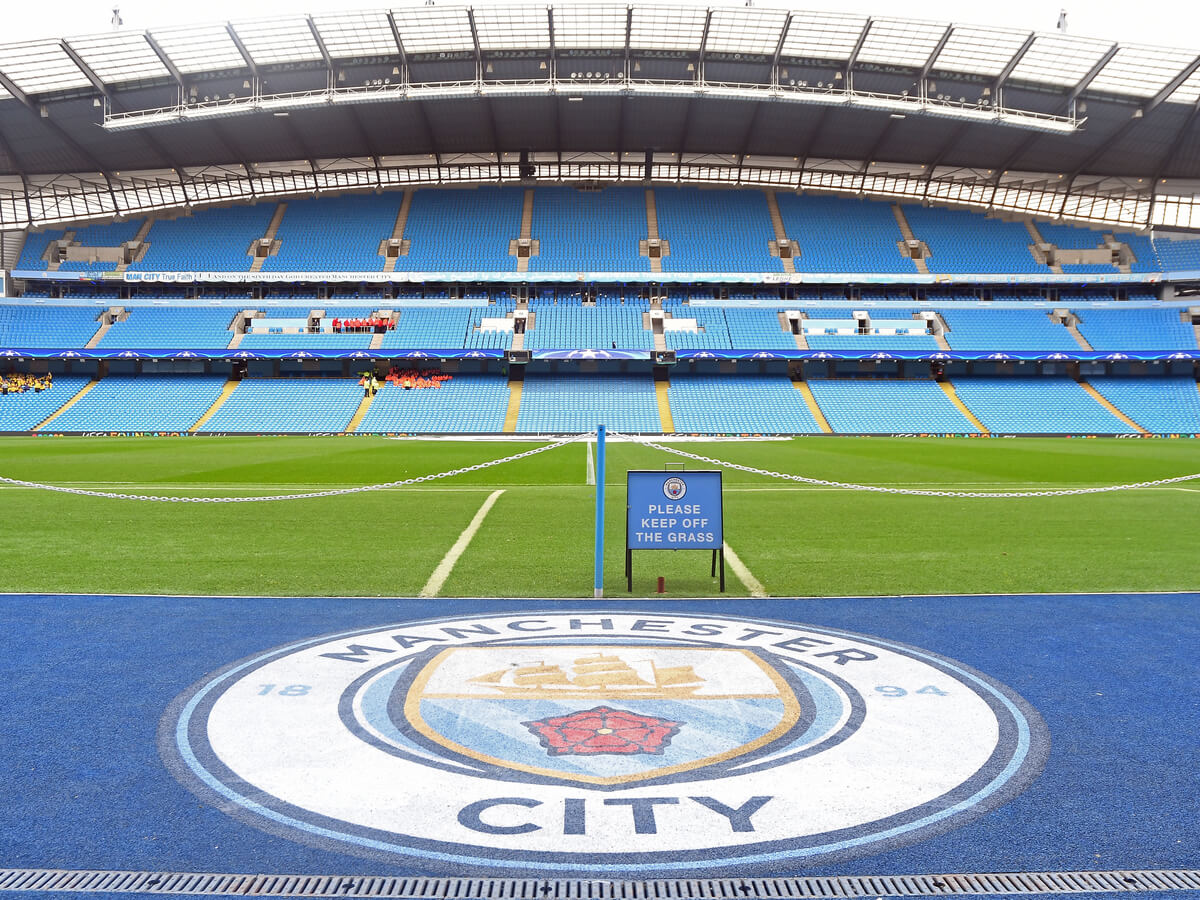
Manchester City and their collaboration with OKX is a good example of the partnership that has involved the use of training kit branding and digital campaigns. Other top clubs have arranged for formal cryptocurrency exchange partners or official blockchain partners, which are aimed at associating the crypto companies with traditional legacy sponsors without necessarily taking the prime shirt or front slot.
Simultaneously, crypto brands have entered the arena of tournament sponsorships and stadium advertising, frequently purchasing visibility where the rules of consumer financial promotion are less complex than those of direct product advertising.
It is very simple for crypto companies to achieve their goal - they want to gain credibility through the football association. One of the great strengths of football is the way it is established as an institution, its traditions, the role it plays in the community and the regularity that its ritual provides to the industry, which is still struggling with the perception of speculation and scandal. It’s an opportunity to borrow some of its good reputation.
Fan tokens, NFTs and “engagement” products
Products built around fandom represent the more innovative direction of these brand partnerships.
Fan tokens, especially those popularised via platforms such as Socios (built on the Chiliz ecosystem), offer fans the ability to purchase tokens which can then be used for voting in club polls or accessing exclusive club measures. Early adopter clubs like Barcelona, Paris Saint-Germain and Juventus have been using token campaigns as a way for fans to have a say in certain club decisions, which are usually choices with little impact, such as the design of the captain's armband, the song for the goal celebrations, or the message on the training ground.
Fan clubs and consumer advocacy groups have expressed worries that such things can be less of a membership and more of an investment asset whose value goes up and down based on team performance, transfer speculations, and the entire crypto market cycle.
As a new merchandise category, NFTs have been proposed with exclusive highlights, player art, game, day moments, or digital tickets. Some clubs and leagues have tried drops related to anniversaries, trophy wins or player milestones, to turn digital scarcity into income.
Actually, the market has been quite irregular. NFT trading volumes cleaned out from their peak hype levels, and clubs have been more careful about promising long-term value. The focus has moved away from speculative resale potential to collectables consideration and the experiential advantages, like meet and greets or exclusive content.
A mini group of partnerships is delving into payments and backend uses crypto payment options for merchandise, blockchain-based ticketing trials to fight fraud, and digital identity experiments. These programmes generally get less media attention but might be more lasting if they lower costs or enhance the match-day experience.
A relationship tested by market crashes
The crypto winter of 2022 and several high-profile failures revealed how some football-crypto partnerships were not as sturdy as they were believed to be. The downfall of major companies and the general slump in token prices threw clubs into a difficult position. They publicly asked themselves what would happen if a sponsor did not pay, how to handle fans' products backed by unstable assets, and what was considered sufficient due diligence if the sponsor was a multinational with changing regulations.
Some deals have been quietly renegotiated, terminated, or restructured. Clubs, even where contracts have remained unchanged, have become more aware of the potential negative impact on the public image of promoting high-risk financial products to supporters, including young fans.
This danger to the club's image is not just a matter of theory. Football has, over the past few years, been criticised for gambling sponsorships; in some countries, crypto has been similarly classified by regulators and advertising watchdogs as a high-risk promotion and is therefore treated as such.
The regulatory squeeze
As crypto promotion has become more mainstream, regulators have tightened the rules around marketing these products. For example, financial promotion rules and enforcement of advertising standards in the UK have pushed brands to give clearer risk warnings and be more careful with targeting. National regulators across Europe have responded differently, resulting in a patchwork that complicates campaigns for clubs with international audiences.
This is significant because football sponsorship is naturally cross-border. A shirt sponsor appearing in a global broadcast can lead to scrutiny in multiple jurisdictions. Clubs and brands have reacted by changing their messaging, highlighting technology partnerships rather than investment returns, or by limiting certain promotions to particular countries and channels.
The crypto regulatory frameworks being implemented in different regions are also evolving, which means that brands can now legitimately sponsor elite sports. Well-capitalised exchanges have compliance teams, and licences are in a better position than smaller token projects. Thus, the market is being pushed towards fewer, larger players.
What clubs get and what fans think they’re getting
For clubs, the immediate benefit is money - a guaranteed sponsorship revenue and, in some cases, a share of token or NFT sales. The more ambitious offer is fan engagement, especially for global fans who will never be in the stadium and who want a digital connection.
For fans, the value proposition is a bit less straightforward. Some fans like the idea of token-driven polls and enjoy getting limited collectables; others believe that the football club is simply monetising the fans even more, making it more and more expensive to be a fan. By selling volatile tokens to supporters, arguably as a participation tool rather than a means of speculation, the critics point out that the eventuality is that the fan will get entertainment and will also be a customer of a financial product at the same time, without even realising it.
There is also a cultural tension between football, which focuses on community and tradition, and, on the contrary, crypto, which is mostly associated with disruption and, occasionally, with get-rich-quick schemes. Clubs have had to figure out that a sponsorship deal may be very attractive from a financial point of view, yet at the same time, it can lead to a backlash if the fans feel they are being exploited or if the sponsor's business model is not well understood.
Where the relationship goes next
The next stage of crypto, football collaborations, is expected to be more narrowly focused, heavily compliance-driven, and more utility-oriented. Instead of flashy token launches, football clubs are more and more concentrating on stable sponsorship income and digital products that essentially operate like regular commerce collectables with clear pricing, loyalty schemes having transparent benefits, and technology pilots that help reduce fraud or enhance the customer experience.
Crypto companies, on their end, still consider football as a vehicle to tap into mainstream relevance. However, after a time marked by very rapid growth and periodically excessive behaviour, the brands that continue to be involved in the game are now under the double pressure of proving their ability to survive market cycles and showing that their football involvement goes beyond just a logo and a hype campaign.
A challenge that started as a frenzy for attention is gradually turning into a more prudent courting. The money is still there, but so are the questions - who assumes the risk, who comprehends the product, and whether football, so often a reflection of society at large, wants to associate its most high-profile real estate with an industry that is still in the process of gaining trust.