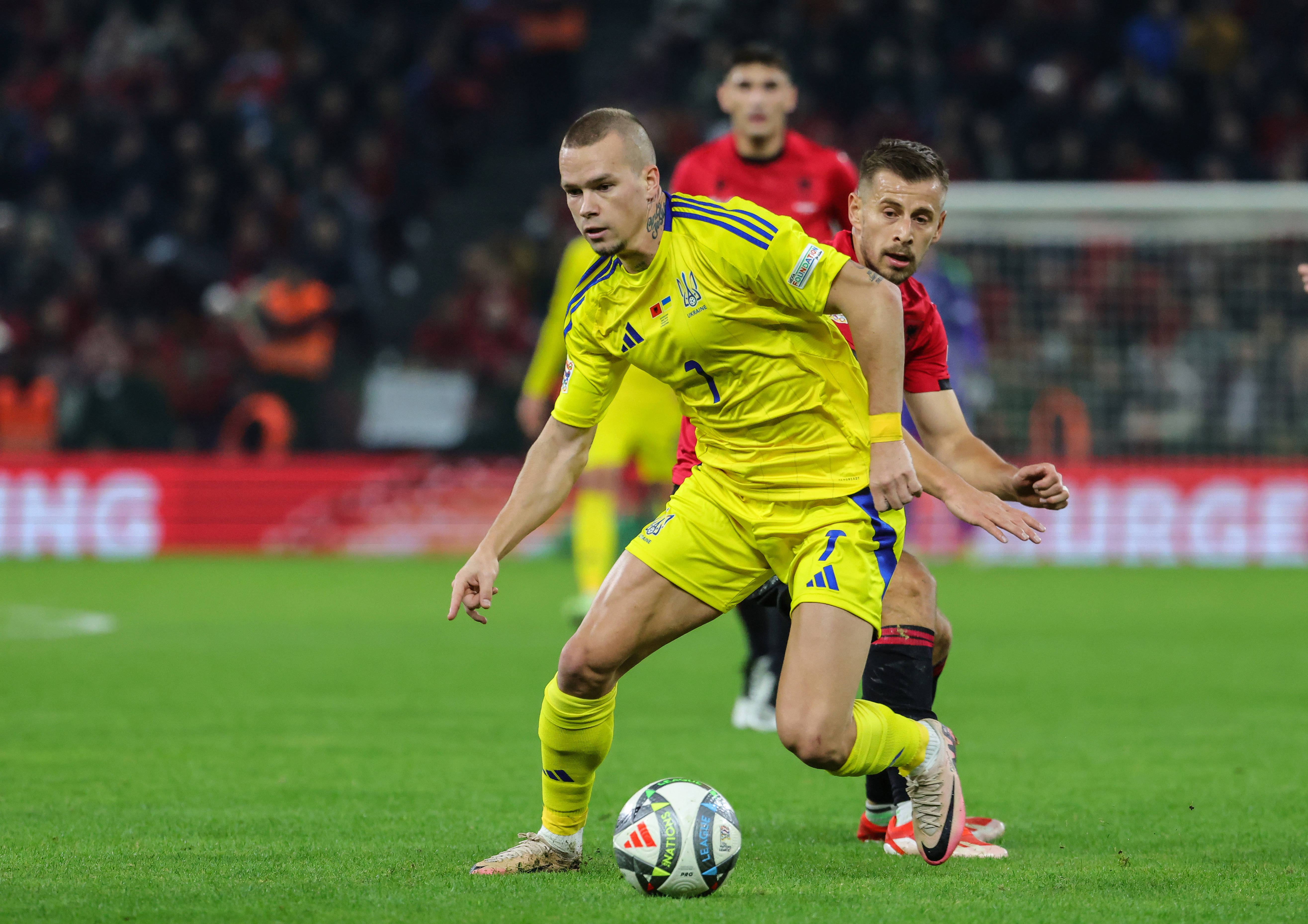
Mykhailo Mudryk says he believes the failure at the heart of his drugs ban was linked to an Ukraine national-team camp, and that the Ukrainian FA’s administration and communications made an already difficult process worse.
The 25-year-old, currently on a season-long loan from Chelsea, was suspended from football from November 2024 until July 2026 after testing positive for meldonium, a substance banned under anti-doping rules. Mudryk insists he did not take it knowingly and believes it entered his system while he was on international duty.
In a lengthy interview with Ukrainian YouTube channel Guest of Gordon, Mudryk was asked who he held responsible for his time away from the pitch. He answered directly that the blame lay with the national-team setup: ‘Yes, exactly.’ His view is that his only time in Ukraine at the relevant stage was to be with the national team, which he says points to the source being a camp environment rather than individual action.
Mykhailo Mudryk, Tottenham player, said:
"The environment, the situation in the Ukrainian national team,"
"It should never have existed. I probably haven't said it publicly yet, but I'm saying it now.
"I had never heard of a drug like meldonium. It is a drug you can only get in Eastern Europe. It could only have got into my body in Ukraine. There is no such drug in England."
CAS appeal changed the punishment
Mudryk initially faced a lengthy ban from the Football Association (FA). He then successfully appealed to the Court of Arbitration for Sport (CAS), which enabled him to return to football. He later accepted that he had breached anti-doping rules and agreed a suspension equivalent to the time he had already served, allowing his career to move forward.
The winger also claimed the UAF did not offer adequate support during the legal process. He said UAF president Andriy Shevchenko provided little help, and that the association was responsible for leaks emerging during the case. Mudryk further argued that the way the matter was managed delayed his return to top-level football, even as he said he continued to fight for clarity and a way back.
Costs, mental strain and legal battle
Mudryk said he spent millions of pounds on legal fees and support during his ban, including coaching, pitch hire and private physiotherapy while, he claims, he could not access services at Chelsea. He described the initial shock of a positive test as overwhelming, saying it hit him ‘very hard, mentally’.
BBC Sport previously contacted the UAF for comment. In the same reporting cycle, a UAF spokesperson said last year that the organisation was in close contact with Mudryk’s lawyers and had not been approached by the FA about the case.
For Tottenham and for Mudryk’s own matchday readiness, the key impact of the legal timeline is straightforward: the longer the suspension, the more pre-season and competitive rhythm are lost. Mudryk’s account now adds another layer—contesting not just the substance’s origin, but also the national federation’s role in how the case unfolded.